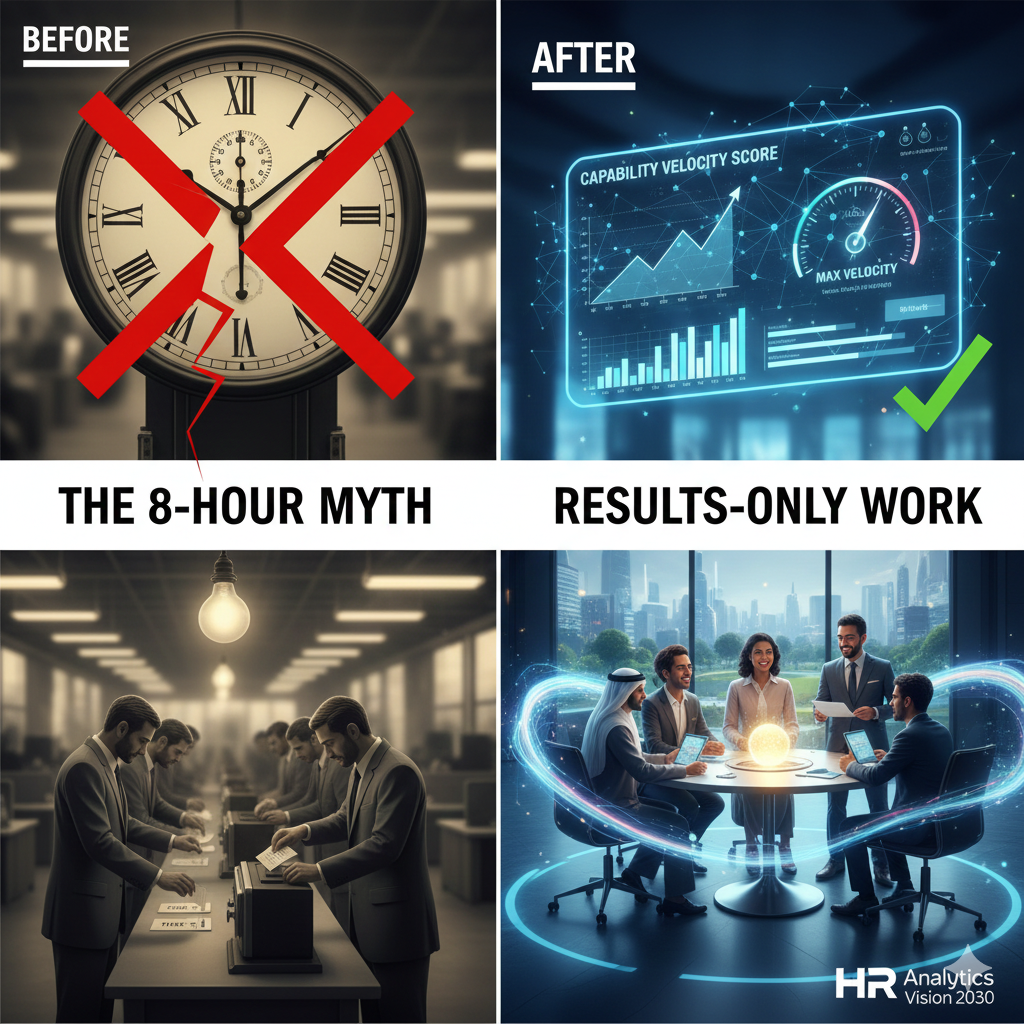
The 8-Hour Myth: Why the GCC Must Measure Capability Velocity, Not Clock-In Times
The 8-hour workday is a human invention, not a strategic necessity. In the high-pressure environment of the GCC, relying on "time-at-desk" as a proxy for value is a primary driver of Sunk Talent Cost and stagnation. This executive briefing explores why HR leaders in the UAE and KSA must stop measuring the clock and start measuring Capability Velocity. By shifting the focus from input to objective output, organizations can unlock the creativity and efficiency required to meet the ambitious milestones of Vision 2030.
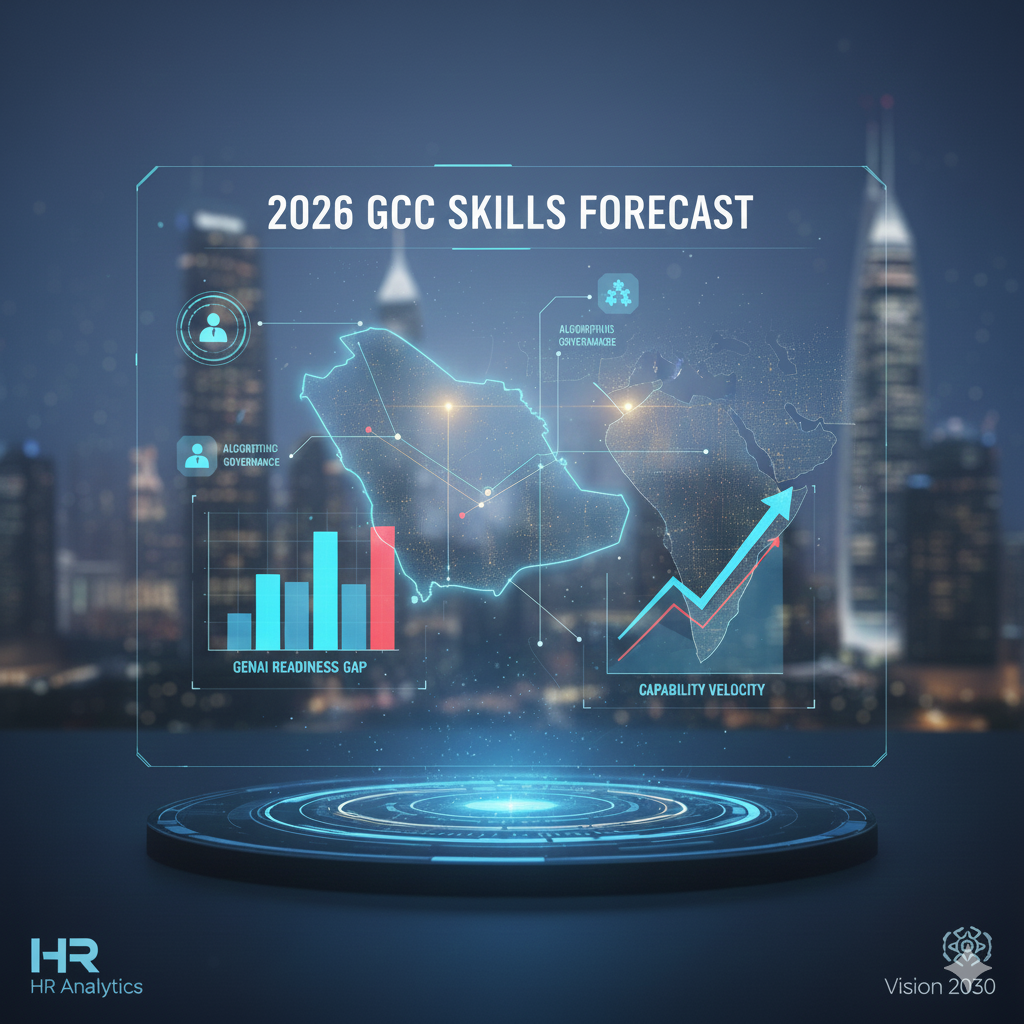
The 2026 Skills Forecast: Why HR Analytics Must Predict GenAI Readiness for Vision 2030
As the GCC transitions from AI experimentation to centralized governance mandates, the 2026 HR budget is officially a technology investment. The biggest risk to Vision 2030 isn't hardware—it's the Sovereign AI Talent Gap. This executive briefing explores why HR Analytics must move beyond reporting to predict GenAI readiness, algorithmic governance, and complex data stewardship.

The Compliance Deadline Trap: Why Meeting Emiratization Quotas in December is a Talent Risk
The UAE's Emiratization deadline forces a critical choice: Manage short-term Compliance Risk or protect your long-term Talent Assurance. The biggest financial threat is the Compliance Deadline Trap: rushing unqualified hires in December, leading to exponentially expensive Sunk Talent Cost in 2026. HR Analytics must move immediately to Manager Readiness Scores and Capability Velocity Forecasting to ensure every national hire is a strategic asset, not a temporary fix.

The Supermanager Playbook: Fueling Vision 2030 ROI by Mastering the 3 E's of Change
Josh Bersin’s research on “The Rise of the Supermanager” reveals a critical truth: AI success depends on frontline managers. This article breaks down Bersin’s 3 E’s—Enable, Encourage, Empower—into actionable HR Analytics and Change Management strategies for GCC leaders driving Vision 2030 and Emiratization.

The Experiential Edge: Why HR Analytics and Change Leadership Cannot Be Taught Online in the GCC
E-learning can’t teach judgment. For HR leaders driving Vision 2030 and Emiratization, the real challenge isn’t awareness—it’s mastery. Discover why experiential, high-touch workshops are the only way to embed complex HR Analytics and Change Leadership skills that deliver measurable ROI.

The Experiential Edge: Why HR Analytics and Change Leadership Cannot Be Taught Online in the GCC
Vision 2030 ROI isn't built on e-learning modules. This exclusive analysis reveals why GCC HR leaders must move beyond compliance and invest in high-impact, in-person workshops to master HR Analytics and Change Leadership, eliminating the costly Sunk Talent Risk in Emiratization and Saudization.

AI Isn’t a Job Threat—It’s a Vision 2030 ROI Engine
AI isn’t a threat—it’s the ROI engine for Vision 2030 and UAE Vision 2031. For GCC boards and CEOs, the question is no longer “Should we adopt AI?” but “Where do we invest human capability to unlock value—safely and at scale?”
This strategic brief outlines three imperatives for leaders:
Governance & Trust by Design: Embed NIST and OECD principles, ensure PDPL compliance, and treat vendor AI as third-party risk.
Capability Velocity: Build change leadership muscle and digital upskilling programs to convert AI into operating margin and service quality.
Global Partnerships as a Force Multiplier: Leverage international cooperation agreements as signals of trust and knowledge exchange—not competition.
With AI projected to add US$320B to Middle East economies by 2030, and 23% of jobs set to change within five years, capability—not technology—is the ultimate differentiator. Boards that act now will secure first-mover advantage and regulator-ready trust.