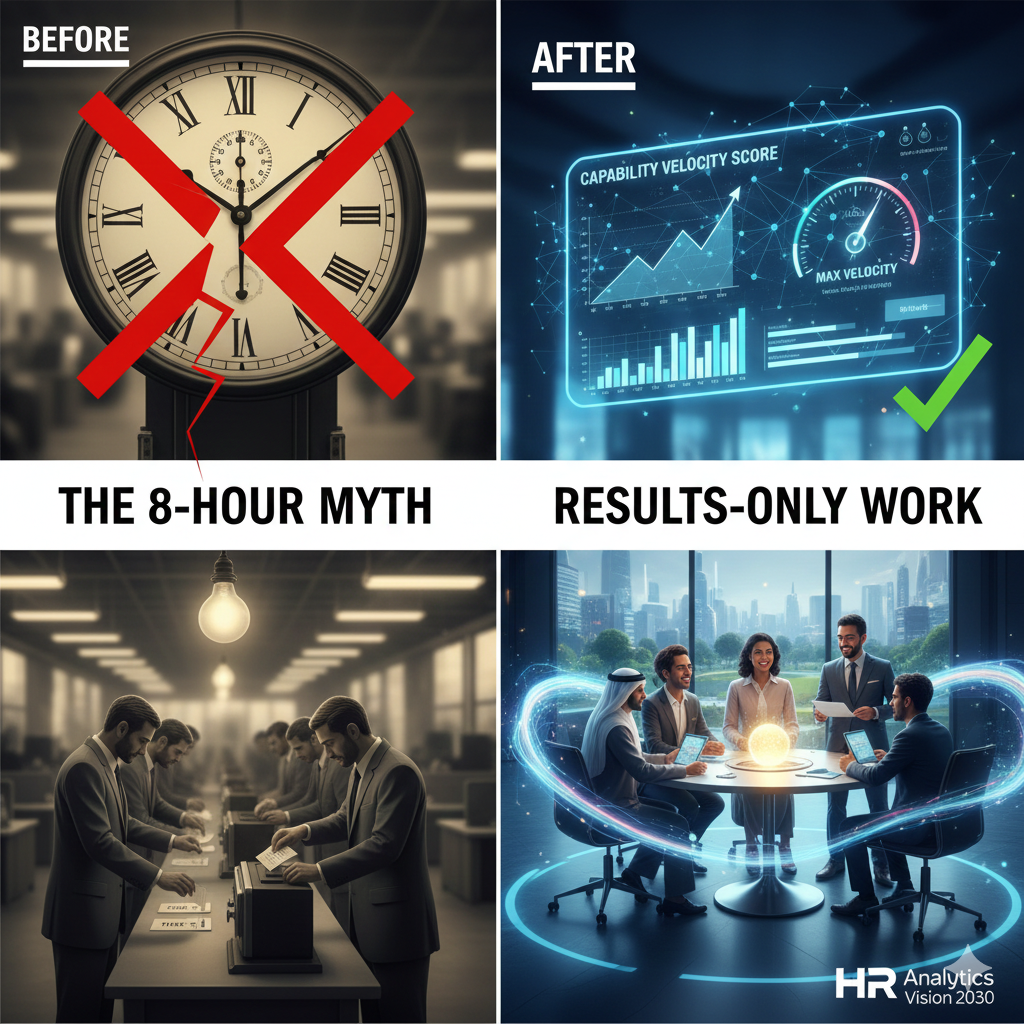
The 8-Hour Myth: Why the GCC Must Measure Capability Velocity, Not Clock-In Times
The 8-hour workday is a human invention, not a strategic necessity. In the high-pressure environment of the GCC, relying on "time-at-desk" as a proxy for value is a primary driver of Sunk Talent Cost and stagnation. This executive briefing explores why HR leaders in the UAE and KSA must stop measuring the clock and start measuring Capability Velocity. By shifting the focus from input to objective output, organizations can unlock the creativity and efficiency required to meet the ambitious milestones of Vision 2030.

The Experiential Edge: Why HR Analytics and Change Leadership Cannot Be Taught Online in the GCC
Vision 2030 ROI isn't built on e-learning modules. This exclusive analysis reveals why GCC HR leaders must move beyond compliance and invest in high-impact, in-person workshops to master HR Analytics and Change Leadership, eliminating the costly Sunk Talent Risk in Emiratization and Saudization.

AI Isn’t a Job Threat—It’s a Vision 2030 ROI Engine
AI isn’t a threat—it’s the ROI engine for Vision 2030 and UAE Vision 2031. For GCC boards and CEOs, the question is no longer “Should we adopt AI?” but “Where do we invest human capability to unlock value—safely and at scale?”
This strategic brief outlines three imperatives for leaders:
Governance & Trust by Design: Embed NIST and OECD principles, ensure PDPL compliance, and treat vendor AI as third-party risk.
Capability Velocity: Build change leadership muscle and digital upskilling programs to convert AI into operating margin and service quality.
Global Partnerships as a Force Multiplier: Leverage international cooperation agreements as signals of trust and knowledge exchange—not competition.
With AI projected to add US$320B to Middle East economies by 2030, and 23% of jobs set to change within five years, capability—not technology—is the ultimate differentiator. Boards that act now will secure first-mover advantage and regulator-ready trust.

What Canada–UAE AI Collaboration Reveals About the Future of Workforce Strategy
UAE’s centralized mandate-driven approach vs Canada’s decentralized innovation-led approach, highlighting workforce capability and upskilling challenges